


By El Puente Institute
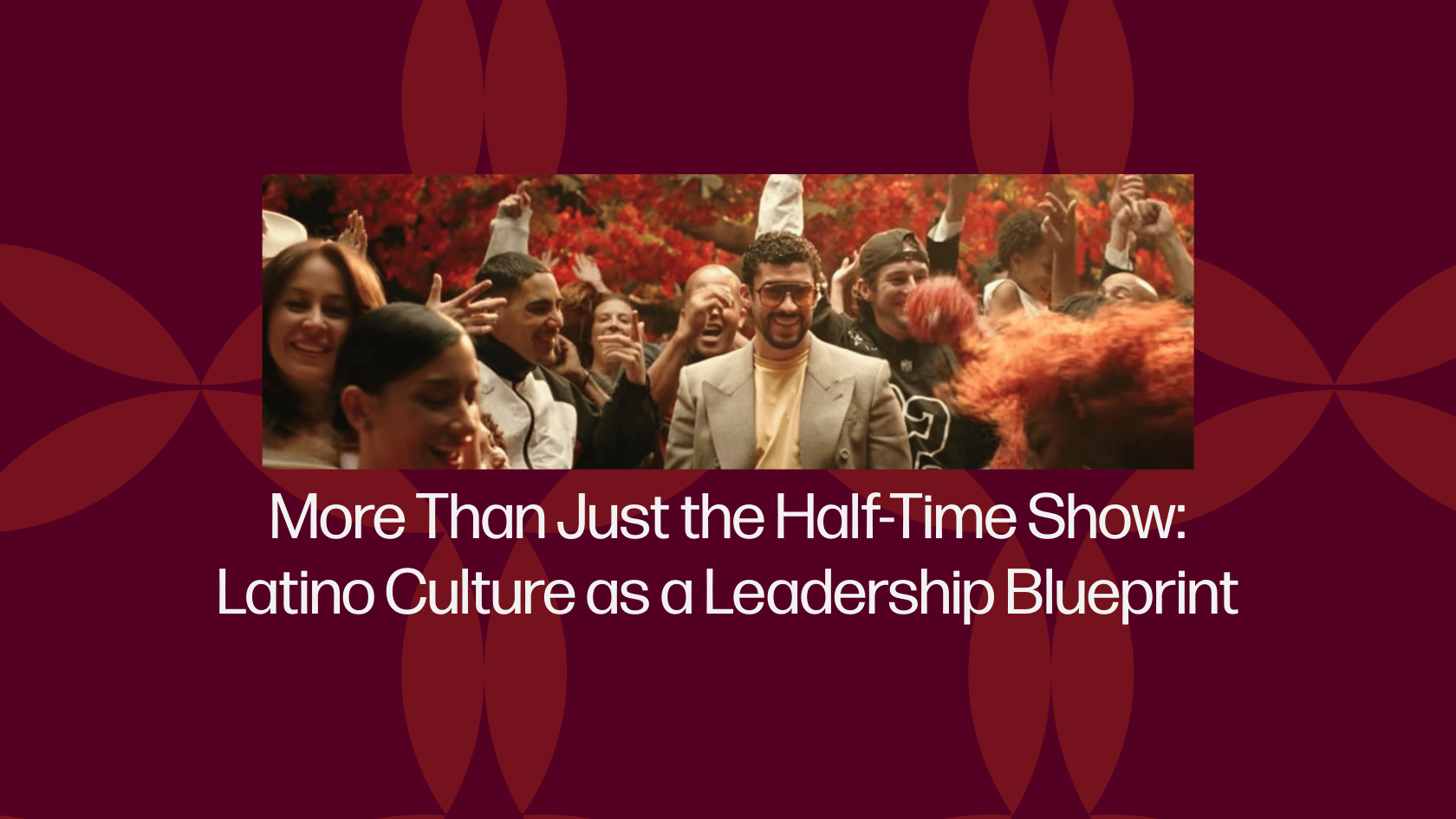
As the world turns its attention to the Super Bowl, the halftime show once again becomes a global stage where history is being made for the Latino community. This year, that moment carries even deeper resonance.
Just days ago, Bad Bunny took home one of the most coveted honors in music, winning Best Album at the Grammys for DeBÍ TiRAR MáS FOToS. The win was historic, not just for what it recognized artistically, but for what it affirmed culturally.
A Spanish-language album. Rooted in memory, place, grief, joy, and resistance. Honored on one of the world’s biggest stages.
That matters!
And at El Puente Institute™, we believe it matters in so many different ways.
Visibility Is Not the Same as Valuation
Latino culture is often welcomed into institutions during moments of celebration. We are invited to bring rhythm, flavor, energy, and joy. These moments can feel affirming, especially in spaces where our full humanity has long been marginalized.
But Latino culture was never meant to be a performance.
What Bad Bunny’s work and his recognition makes visible is something Latino leaders have always known and now we announce out loud and to everyone one to hear; our culture carries meaning, memory, and wisdom. It tells stories that some systems were not built to hear. It insists on dignity where erasure once lived.
Culture, in this sense, is not decoration or for just show, it is the FOUNDATION.
Culture as a Leadership Foundation
For generations, Latino leaders have learned to lead without titles, without protection, and often without acknowledgment. Leadership emerged not from authority, but from responsibility. From proximity. From care for our families and for our communities.
This is the grounding of what we call our Latino Cultural Drivers™.
Cultural Drivers™ are not personality traits or soft skills. They are deeply rooted leadership practices shaped by lived experience, values, and cultural inheritance. When named and regulated with intention, they can become powerful tools for Latino leaders in decision-making, trust-building, and collective progress.
They are not accidental. They are minimal. They are SUPERPOWERS and need one’s own curiosity and intentionality.
Here are few our researchers have been studies and sharing with the community.
Familismo: Leadership That Holds the Collective
Familismo is often reduced to “family orientation.” In leadership, it functions as collective accountability.
Latino leaders shaped by familismo consider who will be affected before decisions are made. They think beyond the individual and toward sustainability. This driver creates leaders who instinctively ask: Who carries the cost? Who benefits? Who needs to be protected?
In uncertain times, familismo anchors leadership in responsibility, not ego.
Personalismo: Trust as Strategy
Personalismo is sometimes misread as informality. In practice, it is trust architecture.
Latino leaders understand that people do not follow titles; they follow relationships. Personalismo builds credibility through presence, listening, and consistency. It allows leaders to move teams, navigate tension, and inspire commitment without relying solely on positional power.
In organizations facing disengagement and burnout, this is not a weakness. It is leadership intelligence.
Respeto: Ethics in Action
Respeto is not about hierarchy alone. It is about how power is held and exercised.
Leaders guided by respeto understand when to speak and when to listen. They honor experience without silencing new voices. Respeto creates environments where people are not diminished in the process of leadership.
At a time when trust in leadership is fragile, respeto restores moral grounding.
Simpatía: Relational Intelligence in Polarized Spaces
Simpatía is often misunderstood as avoiding conflict. In reality, it is a disciplined practice of emotional regulation and relational navigation.
Latino leaders shaped by simpatía know how to move through tension without public rupture. They preserve dignity while addressing complexity. They understand that how something is said can determine whether progress is possible.
In divided environments, simpatía keeps leadership human.
Latino Proximate Leadership: Staying Close to the Impact
What Bad Bunny represents artistically mirrors what Latino leaders practice daily: Proximity.
Latino proximate leaders remain close to the communities most affected by decisions. They lead with lived knowledge, not abstraction. They design solutions grounded in reality because they have navigated constraints themselves.
This is why Latino leaders are often called upon in moments of crisis. They know how to respond when systems fall short.
Honoring the Ground Being Opened
When Latino excellence is recognized on global stages, it opens doors. It expands imagination. It affirms that our stories belong.
But the deeper invitation is this: to move beyond celebration and toward learning.
Latino culture is not just something to applaud. It is something for every Latino to learn from and for every ally to advocate.
Our Call Forward
At El Puente Institute™, our work centers on helping Latino leaders learn about our very own inherited cultural scripts to activating them into your own Cultural Drivers™. Learning to take leadership opportunities from survival to strategy, from instinct to intention.
The halftime show matters. The Grammy matters.
But long after the lights dim and the crowds and social media frenzy fades, the Latino culture will continue doing what it has always done: Leading with dignity, care, and endurance.
Latino culture is more than a moment. More than a performance. It is a leadership foundation built to last and in today’s society, business imperative.
What to learn more about the Latino cultural scripts and transformation to Cultural Drivers™, visit our webpage and follow us here.
https://www.elpuenteinstitute.com/cultural-drivers


